 19-08-24, 17:58
|
#1
|
Join Date: Feb 2011
Posts: 50,659
Thanks: 28,768
Thanked 14,429 Times in 10,235 Posts
|
 Workers Treated Like SLAVES on Scottish Fishing Boats
Imported Workers Treated Like SLAVES on Scottish Fishing Boats
Dozens of workers from around the world may have been trafficked into the UK to work for a small family-owned Scottish fishing firm, a BBC investigation has revealed.
BBC 19 AUG 2024

Joel Quince described being thirsty, hungry and exhausted while working on a Scottish trawler
Thirty-five men from the Philippines, Ghana, India and Sri Lanka were recognised as victims of modern slavery by the Home Office after being referred to it between 2012 and 2020.
The workers were employed by TN Trawlers and its sister companies, owned by the Nicholson family, based in the small town of Annan on the southern coast of Scotland.
The TN Group denied any allegation of modern slavery or human trafficking and said its workers were well treated and well paid.
The company was the focus of two long-running criminal investigations but no cases of human trafficking or modern slavery have come to trial, although some of the men waited years to give evidence.
While TN Trawlers’ lead director, Thomas Nicholson, was under active investigation, TN Group companies continued recruiting new employees from across the world.
Experienced fisherman Joel Quince was 28 when he landed at Heathrow Airport in 2012, thrilled to have secured a job as a deckhand with TN trawlers.
Joel had a young family back home in the Philippines, thousands of miles away. He had been expecting to earn a good income working in the UK. He was to be paid $1,012 (£660) a month for a 48-hour week.
He caught a bus from London to Carlisle, where, he says, he was picked up by the owner’s son, Tom Nicholson Jr.
“On our way to go to the boat he told us: 'You have to give me your documents' - so without hesitation I gave all my documents to them,” he said.
Joel says he was then taken straight to the fishing ground to start working.
But he was surprised to find that his boat was the Philomena rather than the Mattanja, which was the only vessel he was authorised to work on under the terms of his visa. “This was already something fishy for me,” he said
He claims that instead of the 48-hour week he had been told about, he was working 18 hours a day, seven days a week while the Philomena was out fishing.
On his monthly wage of £660, it meant Joel was earning less than the UK minimum wage – although at that time there was no legal requirement to pay it to fishermen like him.
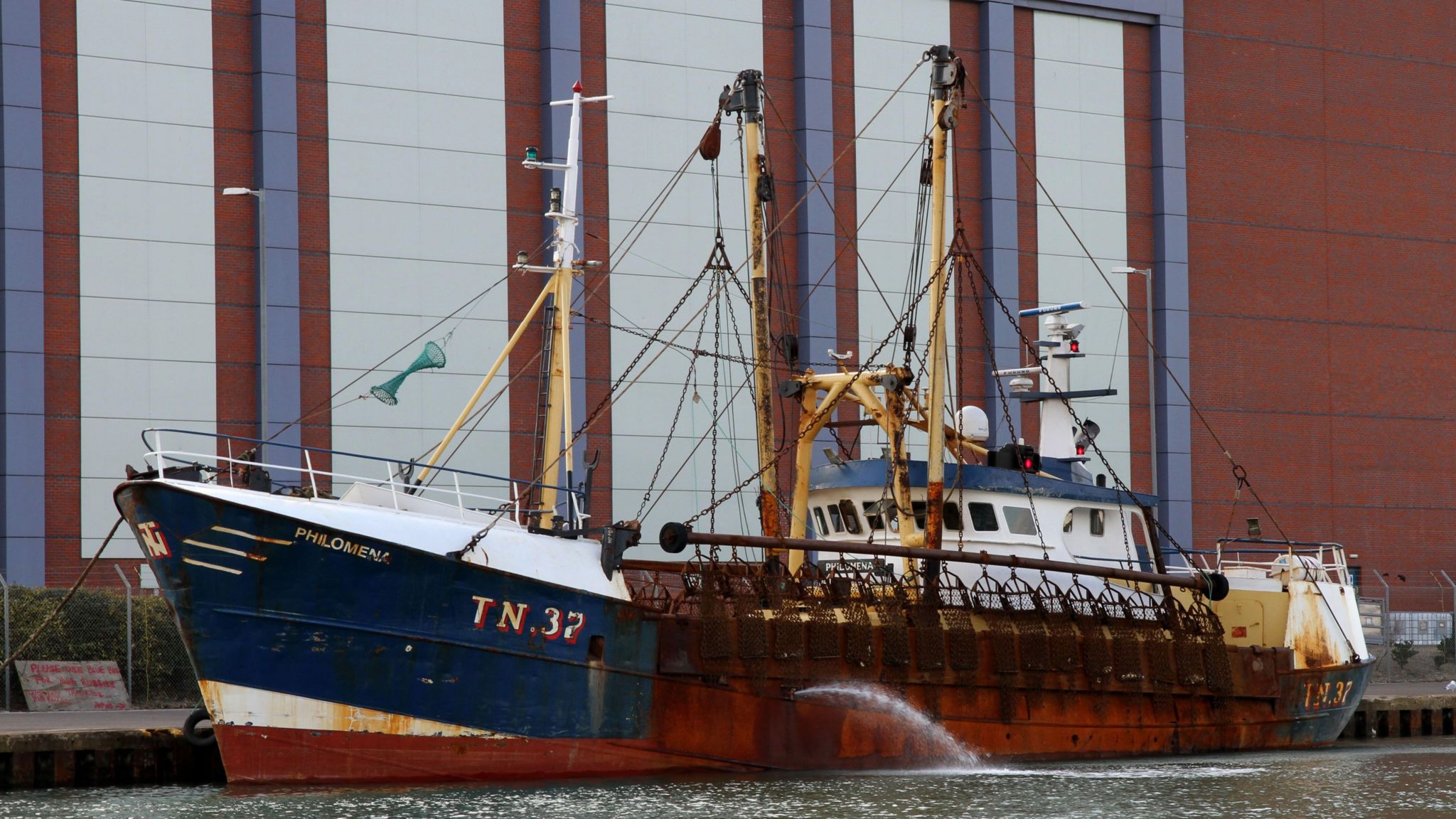
The Philomena was one of the companys vessels
Joel was one of about 30 seafarers who arrived in the UK to join TN Trawlers between 2011 and 2013, mostly from the Philippines. They joined dredgers trawling for scallops along the UK coastline.
These dredgers, built in the 1970s and 80s, work by towing metal nets along the seabed. They scrape up shellfish, as well as stones and bycatch – the other marine life which gets caught in the nets. Deckhands throw back the stones and pack the scallops in ice below deck.
Several of the men the BBC spoke to had little or no fishing experience. All describe working shift patterns as gruelling as Joel’s or worse.
|

|

|